STORY
ABOUT THE Opuntia ficus-indica
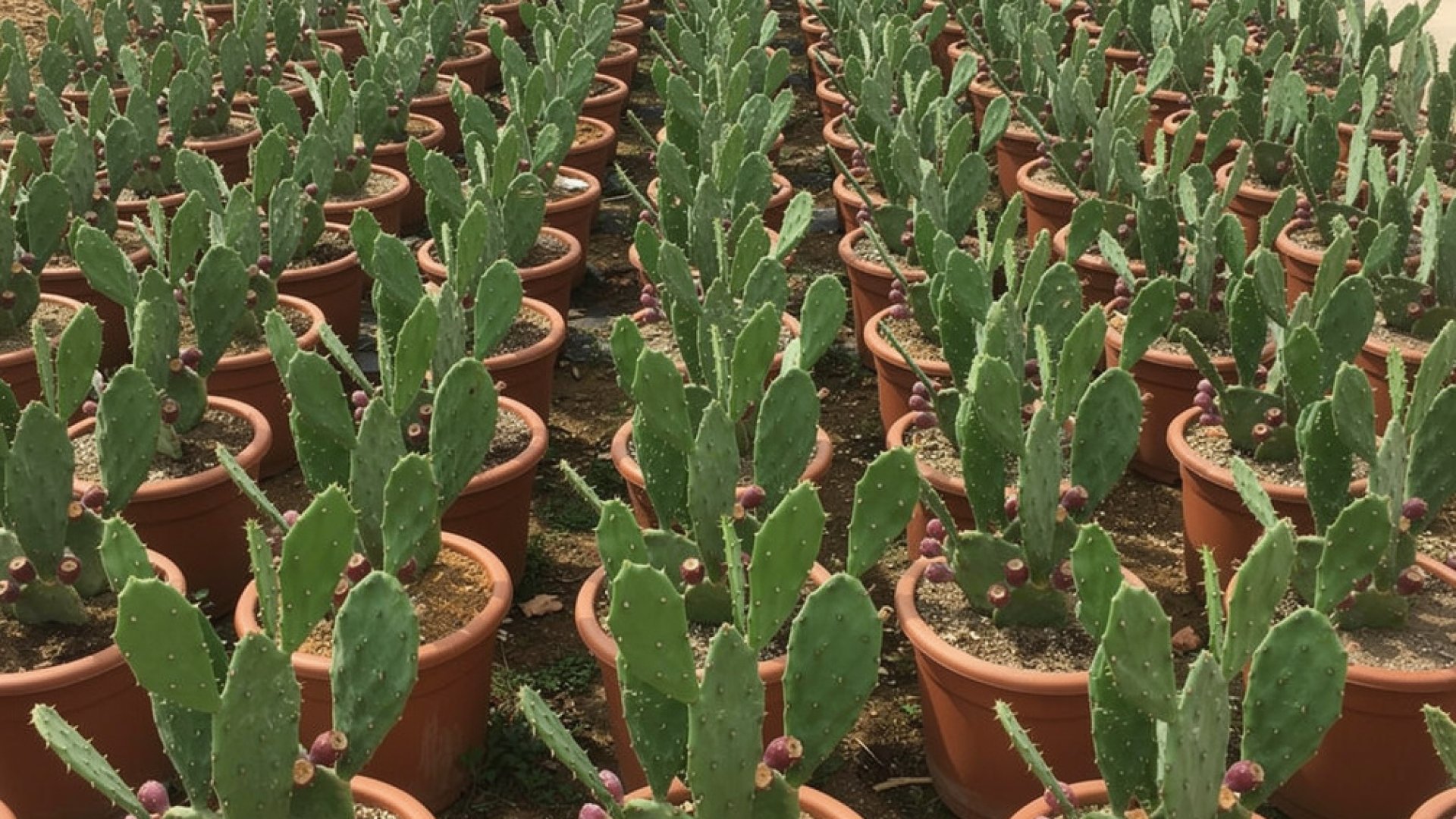
A robust and visually striking cactus widely naturalized throughout the Mediterranean basin, the Prickly Pear Cactus offers flat, paddle-shaped stems and seasonal fruit that add year-round interest to dry gardens. It is virtually indestructible once planted and thrives in poor soils with minimal water inputs, offering excellent return on investment for buyers. It is frequently specified for ecological restoration projects and authentic Mediterranean landscape designs.
AVAILABLE DIMENSIONS
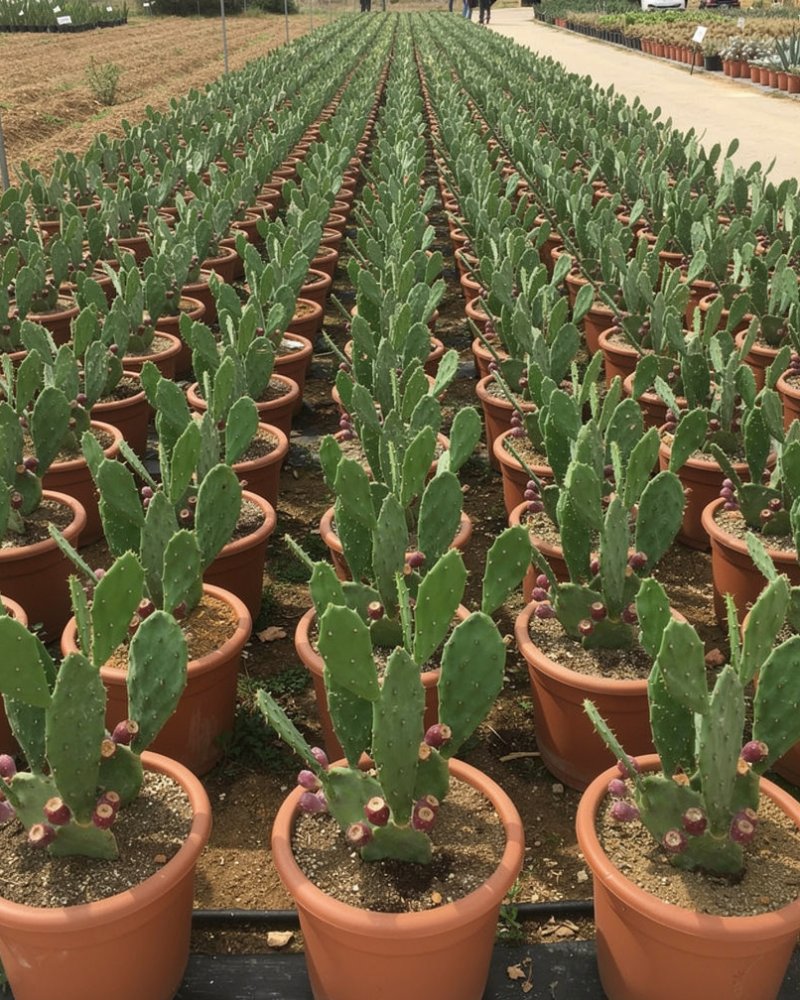
SELECT YOUR IDEAL SIZE
PLANT DETAILS
EVERYTHING YOU NEED TO KNOW
DETAILS
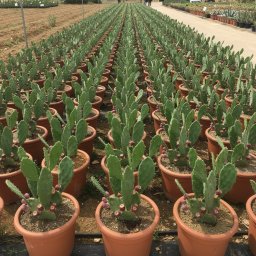
Opuntia ficus-indica, commonly known as Prickly Pear Cactus, belongs to the family Cactaceae. It produces distinctive flat, paddle-shaped cladodes (stems) covered in areoles bearing glochids and occasional spines. Mature plants form large, multi-stemmed shrubby structures reaching 3 to 5 meters in height and spread. In late spring, showy yellow to orange flowers emerge along cladode margins, followed by edible oval fruits ripening from green to red or yellow by late summer.
This species is one of the most commercially significant cacti in Mediterranean horticulture, prized for its year-round structural presence and dual ornamental and productive value. Its bold architectural silhouette makes it a standout specimen in dry garden compositions, and its naturalised status across southern Europe confirms exceptional long-term performance in the field.
This species is one of the most commercially significant cacti in Mediterranean horticulture, prized for its year-round structural presence and dual ornamental and productive value. Its bold architectural silhouette makes it a standout specimen in dry garden compositions, and its naturalised status across southern Europe confirms exceptional long-term performance in the field.
GROWING
Opuntia ficus-indica thrives in well-drained, sandy or rocky soils with a pH range of 6.0 to 8.0. It demands full sun exposure of at least 6 to 8 hours daily and performs poorly in waterlogged or compacted substrates. Once established, irrigation needs are extremely low, making it ideal for water-smart landscape projects. Growth rate is moderate, with noticeable seasonal expansion of new cladodes each spring.
For wholesale production, this species is best grown in coarse, low-fertility substrate mixes to encourage robust root development without excessive vegetative lush growth. Buyers sourcing wholesale Opuntia ficus-indica from a Mediterranean nursery can expect field-hardened stock that transplants reliably with minimal aftercare requirements.
For wholesale production, this species is best grown in coarse, low-fertility substrate mixes to encourage robust root development without excessive vegetative lush growth. Buyers sourcing wholesale Opuntia ficus-indica from a Mediterranean nursery can expect field-hardened stock that transplants reliably with minimal aftercare requirements.
CLIMATE
Opuntia ficus-indica is rated for USDA hardiness zones 8b through 11, tolerating temperatures down to approximately minus 8 degrees Celsius when fully established and dry. It excels in hot, arid, and semi-arid climates and is a defining plant of the Mediterranean climate zone, thriving across Spain, Portugal, Italy, Greece, and North Africa. Its heat tolerance is outstanding, surviving prolonged summer temperatures above 40 degrees Celsius without supplemental irrigation.
Coastal adaptability is good, as it tolerates salt-laden winds and sandy coastal soils effectively. In cooler or wetter microclimate zones, planting on raised berms or south-facing slopes helps prevent root rot, which remains the primary climate-related risk for this otherwise resilient species.
Coastal adaptability is good, as it tolerates salt-laden winds and sandy coastal soils effectively. In cooler or wetter microclimate zones, planting on raised berms or south-facing slopes helps prevent root rot, which remains the primary climate-related risk for this otherwise resilient species.
LANDSCAPING
Wholesale Opuntia ficus-indica is extensively specified for Mediterranean xeriscapes, ecological restoration projects, coastal erosion control, and authentic dry garden designs. It works effectively as a natural barrier hedge, a bold focal specimen, or a mass planting element in large-scale public landscape projects. Recommended spacing for barrier hedging is 1.5 to 2 meters, while specimen planting allows 3 to 4 meters clearance. Suitable companion plants include Agave americana, Lavandula stoechas, Euphorbia characias, and Cistus species.
For B2B logistics, buyers should note that established plants in 5 to 45 litre containers carry significant pot weight, and glochid-bearing cladodes require protective handling gear during loading and transport. Pre-order coordination is advised for large project quantities, as field stock from our wholesale nursery in Spain is available seasonally and subject to phytosanitary certification for export.
For B2B logistics, buyers should note that established plants in 5 to 45 litre containers carry significant pot weight, and glochid-bearing cladodes require protective handling gear during loading and transport. Pre-order coordination is advised for large project quantities, as field stock from our wholesale nursery in Spain is available seasonally and subject to phytosanitary certification for export.
CARE
Opuntia ficus-indica requires minimal ongoing maintenance once established. Pruning is performed in early spring to control spread, remove damaged cladodes, or shape hedging installations. Always use thick gloves and tongs, as glochids are a persistent skin irritant. Fertilization is rarely necessary in native or well-suited soils, though a light application of balanced low-nitrogen fertilizer in spring can support fruiting in productive plantings.
Pest and disease resistance is excellent, with occasional susceptibility to cochineal scale (Dactylopius coccus) requiring monitoring in humid conditions. No winter protection is needed within its recommended hardiness range. Long-term maintenance costs are exceptionally low, making this species a strong return-on-investment choice for professional buyers and landscape contractors.
Pest and disease resistance is excellent, with occasional susceptibility to cochineal scale (Dactylopius coccus) requiring monitoring in humid conditions. No winter protection is needed within its recommended hardiness range. Long-term maintenance costs are exceptionally low, making this species a strong return-on-investment choice for professional buyers and landscape contractors.