STORY
ABOUT THE Phoenix canariensis
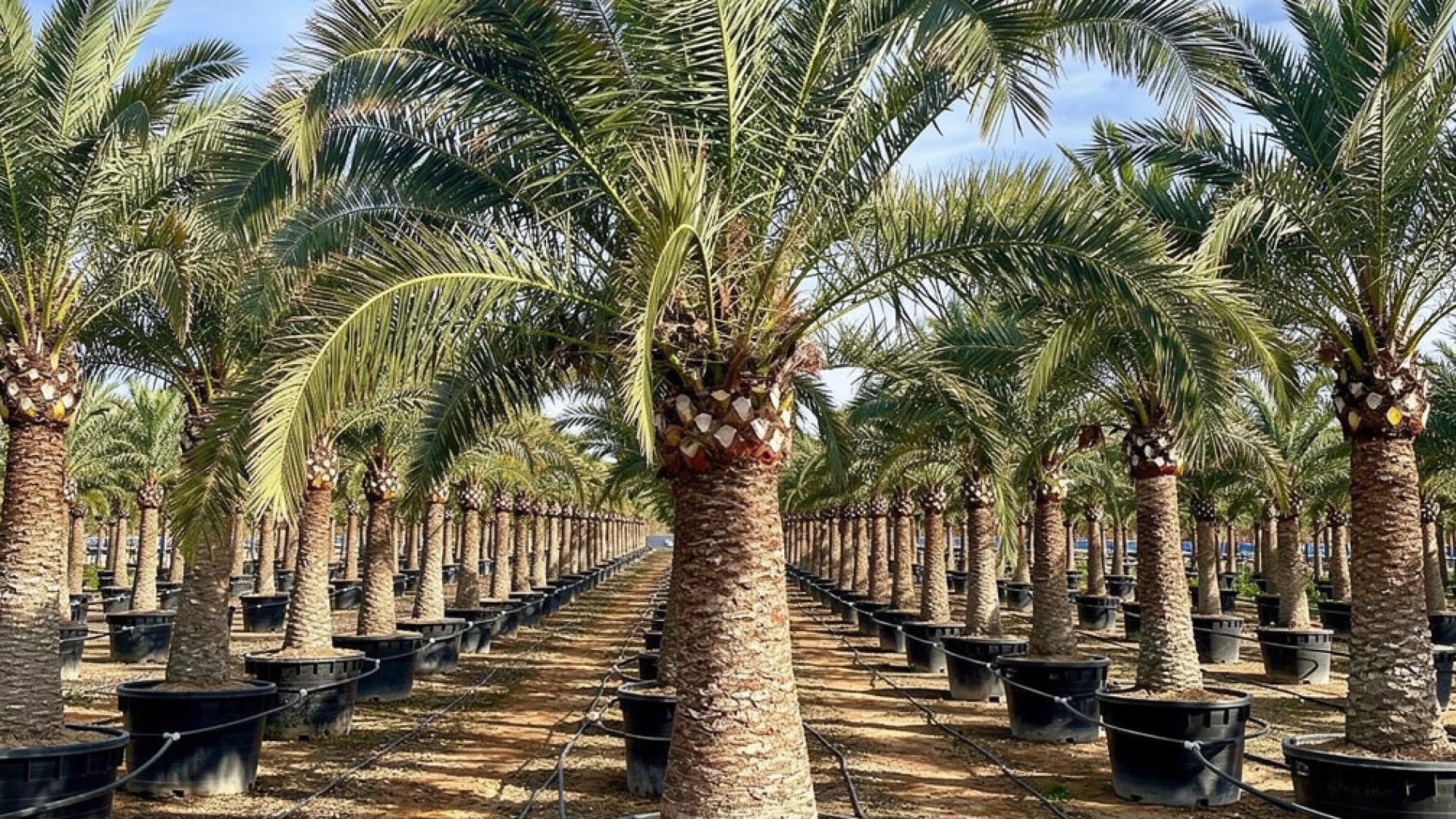
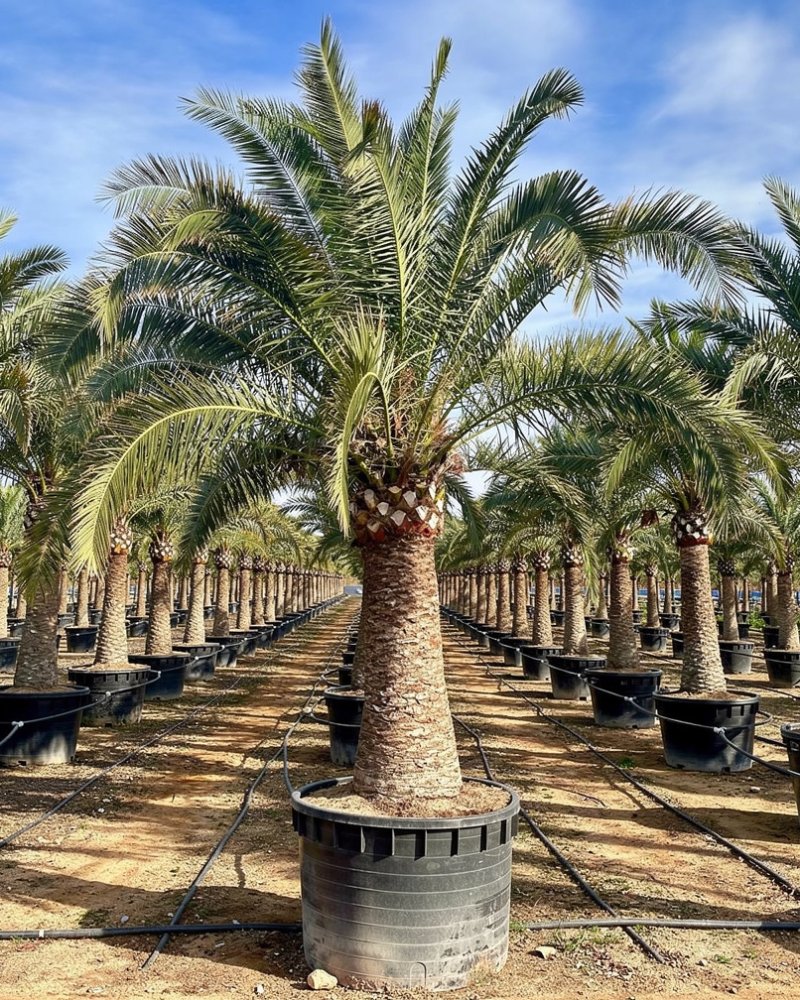
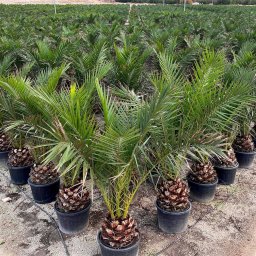
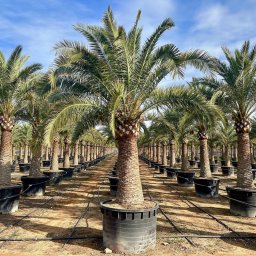
One of the most majestic large palms available for Mediterranean landscaping, the Canary Island Date Palm produces a thick, robust trunk topped with a dense crown of arching fronds. It thrives in full sun and tolerates drought once established, making it a top choice for high-impact commercial projects. Wholesale specimens in advanced sizes command strong demand from landscapers and resort developers alike.
AVAILABLE DIMENSIONS
SELECT YOUR IDEAL SIZE
PLANT DETAILS
EVERYTHING YOU NEED TO KNOW
DETAILS
Phoenix canariensis, the Canary Island Date Palm, belongs to the family Arecaceae and is native to the Canary Islands. It develops a stout, patterned trunk covered in distinctive diamond-shaped leaf base scars, topped by a dense, spherical crown of 8 to 15 meters arching pinnate fronds. Individual leaves can reach 4 to 6 meters in length, composed of numerous stiff, lance-shaped leaflets with sharp basal spines.
Mature specimens reach 10 to 20 meters in height with trunk diameters exceeding 60 centimeters. Drooping clusters of small yellow flowers give way to ornamental orange-yellow dates in autumn, adding seasonal color. This species is among the most architecturally impressive palms available for wholesale Mediterranean landscaping projects.
Mature specimens reach 10 to 20 meters in height with trunk diameters exceeding 60 centimeters. Drooping clusters of small yellow flowers give way to ornamental orange-yellow dates in autumn, adding seasonal color. This species is among the most architecturally impressive palms available for wholesale Mediterranean landscaping projects.
GROWING
Phoenix canariensis thrives in full sun exposure and performs best in well-drained sandy or loamy soils with a pH range of 6.0 to 7.5. It tolerates poor soils but rewards good drainage and occasional deep watering during establishment. Once rooted, its drought tolerance is exceptional, making it ideal for low-maintenance commercial installations.
Growth rate is moderate, averaging 30 to 60 centimeters per year under favorable conditions. Wholesale buyers sourcing large-specimen Phoenix canariensis from nurseries in Spain can expect field-grown trees with well-developed root systems that establish reliably in warm climates.
Growth rate is moderate, averaging 30 to 60 centimeters per year under favorable conditions. Wholesale buyers sourcing large-specimen Phoenix canariensis from nurseries in Spain can expect field-grown trees with well-developed root systems that establish reliably in warm climates.
CLIMATE
Phoenix canariensis is rated for USDA hardiness zones 9 to 11, tolerating brief temperature drops to approximately minus 8 degrees Celsius when mature and acclimated. It performs exceptionally well in Mediterranean, semi-arid, and subtropical climates with hot dry summers and mild winters. Its heat tolerance is outstanding, making it a preferred choice for resort and urban landscaping across southern Europe, North Africa, and coastal California.
Coastal exposure is well tolerated, though protection from prolonged salt spray is advisable for younger specimens. Microclimate considerations, such as proximity to buildings or south-facing slopes, can extend plantability into the cooler edges of zone 8b.
Coastal exposure is well tolerated, though protection from prolonged salt spray is advisable for younger specimens. Microclimate considerations, such as proximity to buildings or south-facing slopes, can extend plantability into the cooler edges of zone 8b.
LANDSCAPING
The Canary Island Date Palm is a premier statement specimen for avenues, hotel entrances, resort pools, roundabouts, and large public spaces. Its formal symmetry pairs beautifully with Agave, Washingtonia, Bougainvillea, and ornamental grasses. Spacing of 5 to 8 meters is recommended for avenue planting to allow crown development without crowding.
Wholesale buyers purchasing large Phoenix canariensis specimens should plan for heavy machinery during transport and installation. Balled and burlapped or containerized specimens in advanced sizes can weigh several tonnes. Coordinating with specialist palm transport suppliers ensures root ball integrity and minimizes transplant stress. Contact our team to discuss buy wholesale Canary Island Date Palm Spain logistics.
Wholesale buyers purchasing large Phoenix canariensis specimens should plan for heavy machinery during transport and installation. Balled and burlapped or containerized specimens in advanced sizes can weigh several tonnes. Coordinating with specialist palm transport suppliers ensures root ball integrity and minimizes transplant stress. Contact our team to discuss buy wholesale Canary Island Date Palm Spain logistics.
CARE
Pruning should be limited to removing fully dead or heavily damaged fronds, as excessive pruning stresses the tree and is associated with increased susceptibility to Rhynchophorus ferrugineus, the red palm weevil. Retain green and transitional fronds to support photosynthesis and crown health. A balanced slow-release palm fertilizer applied two to three times per year supports vigorous growth and frond color.
Phoenix canariensis is relatively resistant to most fungal diseases when sited correctly. Red palm weevil monitoring is essential across Mediterranean regions, and preventive systemic treatments are strongly recommended. Winter protection for young specimens in cooler zones includes trunk wrapping and mulching the root zone generously.
Phoenix canariensis is relatively resistant to most fungal diseases when sited correctly. Red palm weevil monitoring is essential across Mediterranean regions, and preventive systemic treatments are strongly recommended. Winter protection for young specimens in cooler zones includes trunk wrapping and mulching the root zone generously.