STORY
ABOUT THE Washingtonia robusta
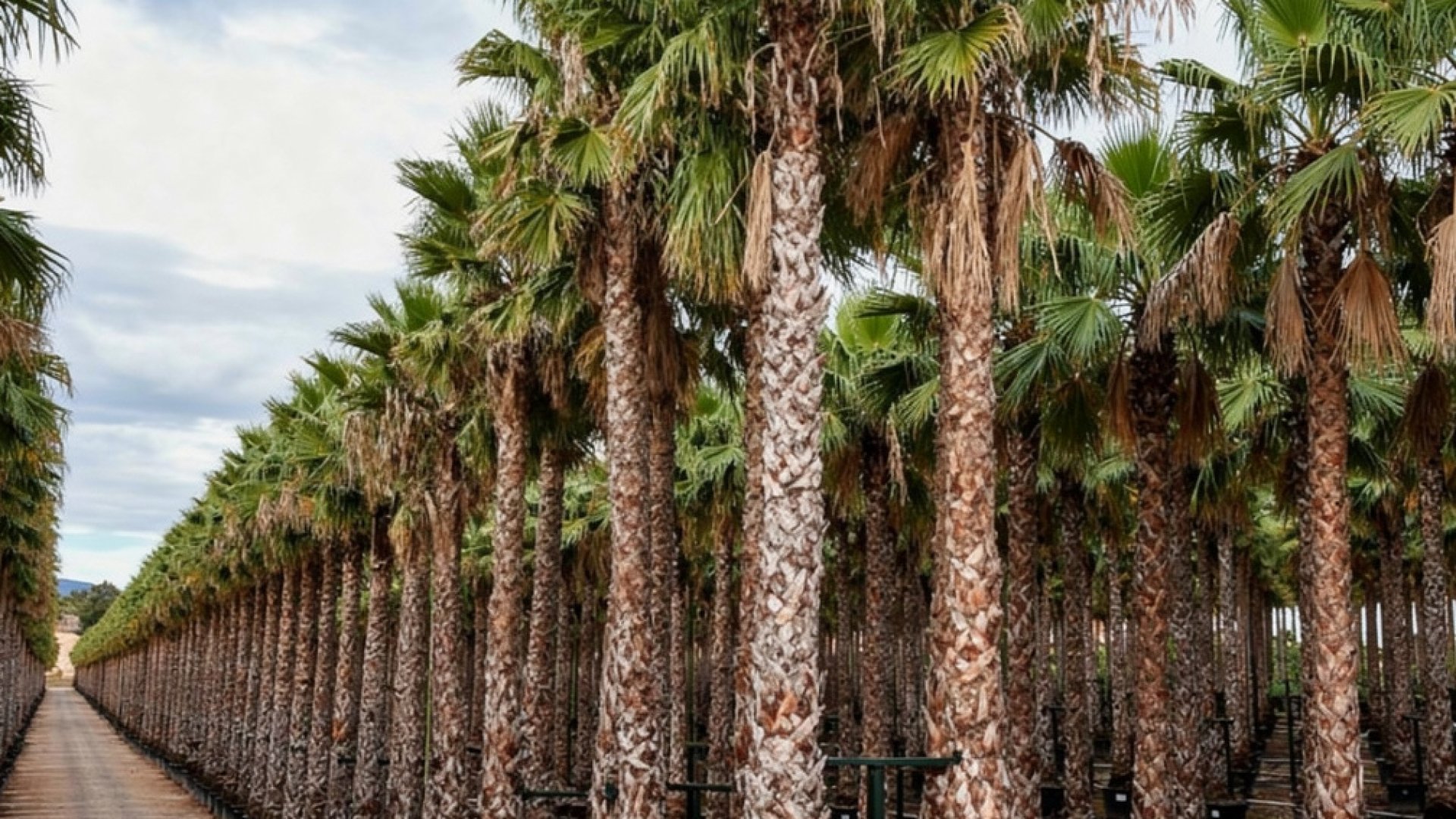
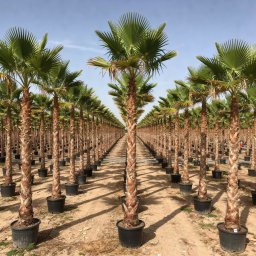
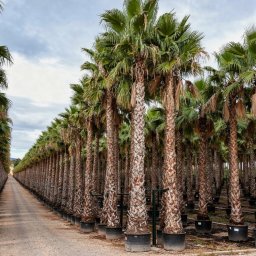
Known for its slender, towering trunk and fan-shaped fronds, the Mexican Fan Palm is a staple in Mediterranean and coastal landscaping across Spain and beyond. It grows rapidly and adapts well to a wide range of soil conditions, offering excellent value at wholesale scale. Its dramatic vertical silhouette makes it ideal for avenue planting and large residential developments.
AVAILABLE DIMENSIONS
SELECT YOUR IDEAL SIZE
PLANT DETAILS
EVERYTHING YOU NEED TO KNOW
DETAILS
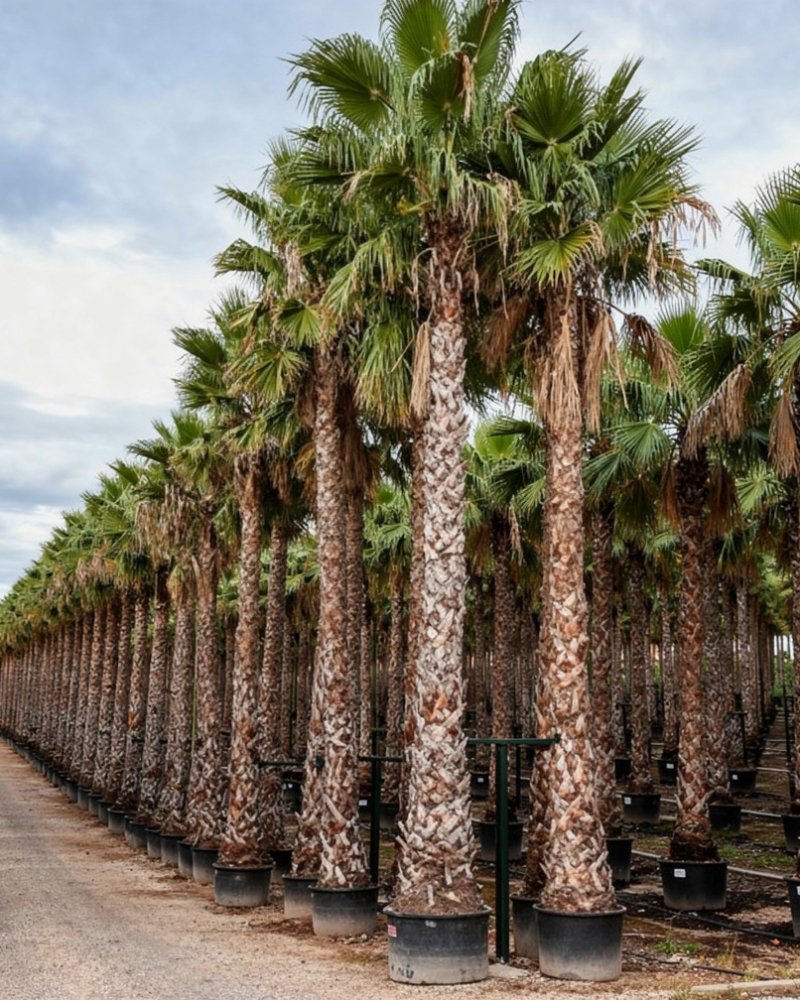
Washingtonia robusta, commonly known as the Mexican Fan Palm, belongs to the family Arecaceae and is native to northwestern Mexico. It produces a slender, columnar trunk that can reach 25 to 30 metres at maturity, topped with a compact crown of palmate, bright green fronds spanning up to 1.5 metres. The petioles are armed with curved reddish spines, and old fronds form a characteristic persistent skirt beneath the crown.
During summer, the plant produces long, arching inflorescences bearing small creamy-white flowers, followed by clusters of small dark purple to black drupes. Its rapid vertical growth and striking silhouette distinguish it clearly from the closely related Washingtonia filifera, making it a preferred species for formal and monumental planting schemes.
During summer, the plant produces long, arching inflorescences bearing small creamy-white flowers, followed by clusters of small dark purple to black drupes. Its rapid vertical growth and striking silhouette distinguish it clearly from the closely related Washingtonia filifera, making it a preferred species for formal and monumental planting schemes.
GROWING
Washingtonia robusta thrives in full sun and adapts to a wide range of well-drained soils, including sandy, loamy, and moderately clay-rich substrates, tolerating a soil pH between 6.0 and 8.0. It is a fast-growing species, capable of adding 1 to 2 metres per year under optimal conditions, making it highly productive for wholesale nursery operations. Irrigation needs are moderate during establishment but reduce significantly once the palm is mature.
For wholesale Washingtonia robusta nursery production, container growing in a nutrient-rich, free-draining medium ensures consistent root ball development. Young specimens benefit from regular deep watering to encourage strong vertical growth and root anchoring prior to field transplantation.
For wholesale Washingtonia robusta nursery production, container growing in a nutrient-rich, free-draining medium ensures consistent root ball development. Young specimens benefit from regular deep watering to encourage strong vertical growth and root anchoring prior to field transplantation.
CLIMATE
This species is well-suited to USDA hardiness zones 9 to 11, thriving across Mediterranean climates, coastal regions, and arid zones throughout southern Europe, the Middle East, and California. It tolerates temperatures down to approximately minus 4 degrees Celsius for short periods, making it suitable for mild-winter regions across Spain, Portugal, Italy, and southern France. Its heat tolerance is exceptional, performing reliably in sustained summer temperatures exceeding 40 degrees Celsius.
Washingtonia robusta demonstrates strong drought tolerance once established and adapts well to coastal environments, tolerating moderate salt-laden winds. Buyers looking to buy wholesale Mexican Fan Palm in Spain will find this species particularly well-matched to the Iberian peninsula's climate diversity, from coastal developments to inland urban planting projects.
Washingtonia robusta demonstrates strong drought tolerance once established and adapts well to coastal environments, tolerating moderate salt-laden winds. Buyers looking to buy wholesale Mexican Fan Palm in Spain will find this species particularly well-matched to the Iberian peninsula's climate diversity, from coastal developments to inland urban planting projects.
LANDSCAPING
Washingtonia robusta is a premier choice for avenue planting, resort landscaping, large residential developments, and urban streetscapes where dramatic vertical structure is required. Recommended spacing for formal avenue planting is 5 to 8 metres apart. It pairs effectively with Agave, Strelitzia, Bougainvillea, and low Mediterranean groundcovers, creating layered, low-maintenance compositions suited to commercial and hospitality projects.
For wholesale buyers, transport logistics are straightforward: specimens in 45-litre to 200-litre containers are manageable with standard nursery equipment, though taller specimens in air-pot or root-ball formats require crane-assisted handling. Our wholesale nursery in Spain supplies Washingtonia robusta in volume with phytosanitary certification, ensuring compliance for cross-border European shipments.
For wholesale buyers, transport logistics are straightforward: specimens in 45-litre to 200-litre containers are manageable with standard nursery equipment, though taller specimens in air-pot or root-ball formats require crane-assisted handling. Our wholesale nursery in Spain supplies Washingtonia robusta in volume with phytosanitary certification, ensuring compliance for cross-border European shipments.
CARE
Pruning should be limited to the removal of fully dead or brown fronds to preserve the ornamental skirt and avoid unnecessary stress. Over-pruning, particularly removing green fronds, weakens the palm and slows growth. A balanced slow-release palm fertilizer applied two to three times per year, supplemented with magnesium and manganese to prevent deficiency in alkaline soils, supports vigorous long-term development.
Washingtonia robusta shows good resistance to common palm pests but can be susceptible to Rhynchophorus ferrugineus (red palm weevil) in affected regions, requiring preventive treatment programmes. Winter protection is rarely necessary in zones 9 and above, though young specimens benefit from trunk wrapping during exceptional cold spells in marginal climates.
Washingtonia robusta shows good resistance to common palm pests but can be susceptible to Rhynchophorus ferrugineus (red palm weevil) in affected regions, requiring preventive treatment programmes. Winter protection is rarely necessary in zones 9 and above, though young specimens benefit from trunk wrapping during exceptional cold spells in marginal climates.