STORY
ABOUT THE Yucca elephantipes
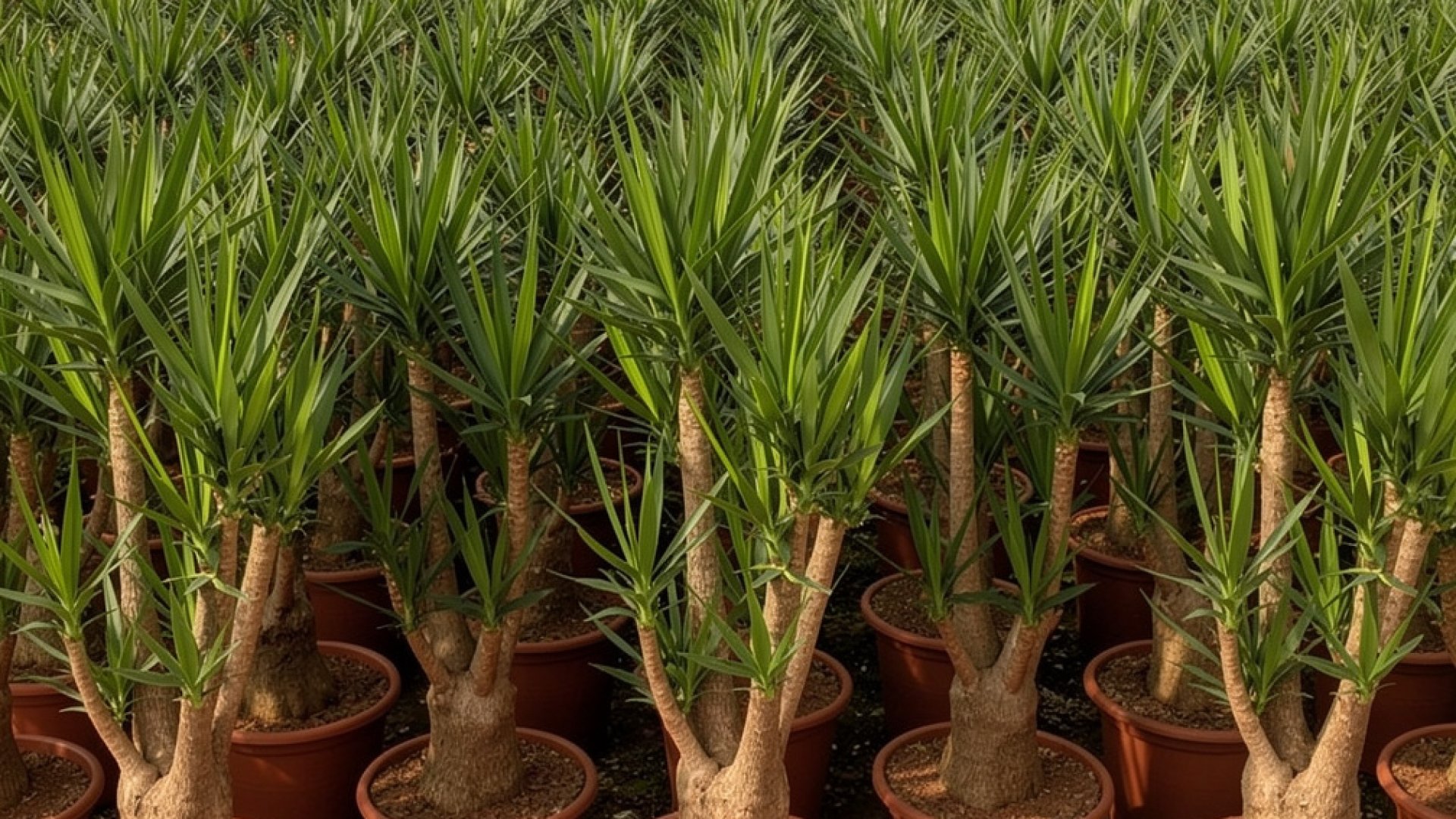
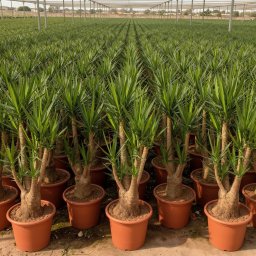
The Spineless Yucca is a large, structural desert plant that delivers a tropical-desert aesthetic without the hazard of sharp leaf tips, making it suitable for high-traffic public spaces and resorts. It can be grown as a single-trunk specimen or multi-stemmed shrub and performs exceptionally well in warm Mediterranean climates. Its clean, modern appearance makes it a consistent bestseller for professional landscapers.
AVAILABLE DIMENSIONS
SELECT YOUR IDEAL SIZE
PLANT DETAILS
EVERYTHING YOU NEED TO KNOW
DETAILS
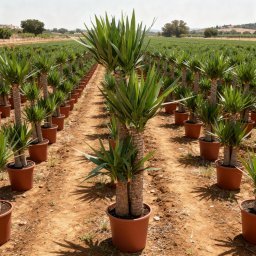
Yucca elephantipes, commonly known as Spineless Yucca, belongs to the Asparagaceae family and is native to Central America and southern Mexico. It develops a thick, elephant-foot-like trunk base with age, producing rosettes of long, sword-shaped, mid-green leaves that lack the sharp terminal spines found on most yucca species. Mature plants can reach 6 to 9 metres in height as single-trunk specimens or form multi-stemmed shrubs of 3 to 5 metres. Mature plants occasionally produce tall panicles of creamy-white, bell-shaped flowers in summer, adding ornamental interest.
The absence of rigid leaf tips makes Yucca elephantipes a distinctly safe and versatile structural plant for public and commercial environments. Its bold, upright silhouette and glossy foliage deliver a strong tropical-desert aesthetic that is consistent year-round, making it a reliable anchor plant for large-scale landscape projects.
The absence of rigid leaf tips makes Yucca elephantipes a distinctly safe and versatile structural plant for public and commercial environments. Its bold, upright silhouette and glossy foliage deliver a strong tropical-desert aesthetic that is consistent year-round, making it a reliable anchor plant for large-scale landscape projects.
GROWING
Yucca elephantipes thrives in well-drained, sandy or loamy soils with a pH range of 5.5 to 7.5. It performs best in full sun but tolerates partial shade, though growth becomes more open and less vigorous in lower light conditions. Water requirements are low to moderate once established, and overwatering or poorly drained soils are the primary cause of root rot.
This species exhibits a moderate growth rate of approximately 30 to 60 cm per year under optimal warm conditions. For wholesale production, container cultivation in a free-draining substrate ensures healthy root development and simplifies logistics for buyers sourcing wholesale Yucca elephantipes from Mediterranean nurseries.
This species exhibits a moderate growth rate of approximately 30 to 60 cm per year under optimal warm conditions. For wholesale production, container cultivation in a free-draining substrate ensures healthy root development and simplifies logistics for buyers sourcing wholesale Yucca elephantipes from Mediterranean nurseries.
CLIMATE
Yucca elephantipes is best suited to USDA hardiness zones 9 to 12, thriving across Mediterranean, subtropical, and warm temperate climates. It tolerates prolonged heat and full exposure without stress, making it ideal for southern Spain, Italy, Portugal, and North Africa. It withstands brief drops to approximately minus 3 to minus 5 degrees Celsius, though sustained frost will damage foliage and may kill younger specimens.
Coastal environments with salt-laden winds are generally well tolerated, provided drainage is adequate. In marginal climates near zone 8, positioning plants in sheltered south-facing microclimates or against thermal walls significantly improves cold hardiness and reduces winter protection requirements for landscape installations.
Coastal environments with salt-laden winds are generally well tolerated, provided drainage is adequate. In marginal climates near zone 8, positioning plants in sheltered south-facing microclimates or against thermal walls significantly improves cold hardiness and reduces winter protection requirements for landscape installations.
LANDSCAPING
Spineless Yucca is a consistent bestseller for landscapers, resort developers, and garden centres seeking bold architectural specimens for poolside areas, hotel entrances, urban plazas, and xeriscape designs. It pairs effectively with Agave americana, Strelitzia reginae, ornamental grasses, and low groundcover succulents. For screening or group plantings, a spacing of 2 to 3 metres between multi-stemmed specimens is recommended.
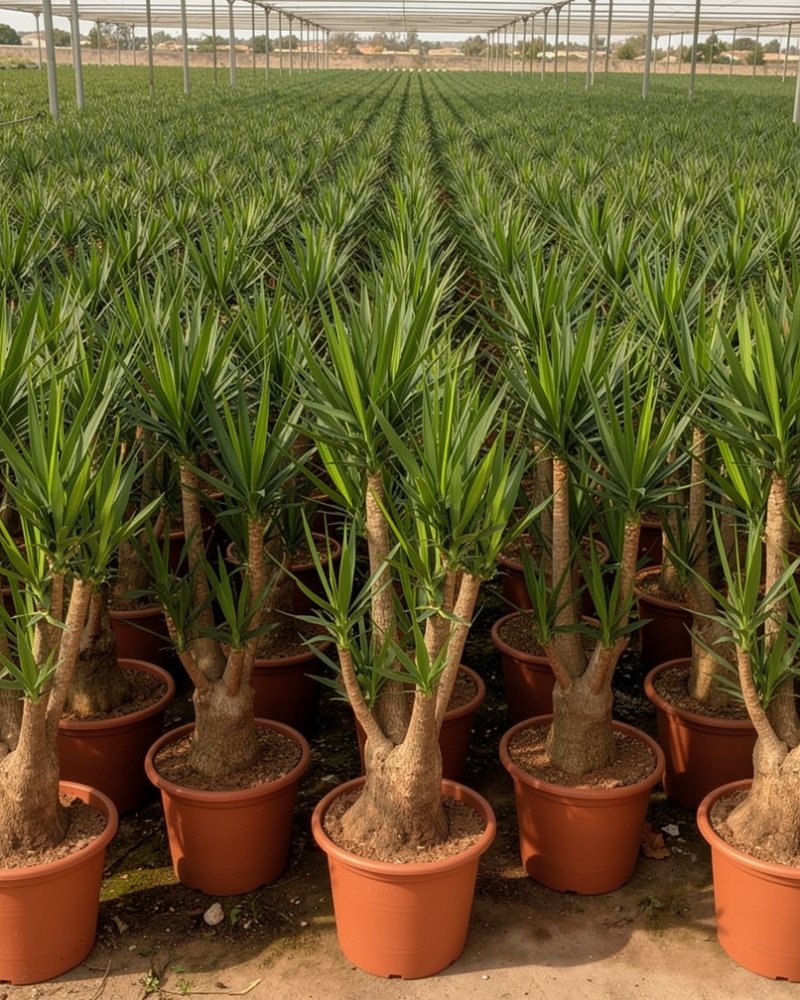
For wholesale buyers sourcing Spineless Yucca in Spain or across Europe, pot sizes typically range from 25-litre to 200-litre containers. Larger specimens require careful crane or forklift handling during loading. Trunked specimens should be secured upright during transport to prevent mechanical damage, and drivers should account for height restrictions when shipping tall single-trunk plants.
For wholesale buyers sourcing Spineless Yucca in Spain or across Europe, pot sizes typically range from 25-litre to 200-litre containers. Larger specimens require careful crane or forklift handling during loading. Trunked specimens should be secured upright during transport to prevent mechanical damage, and drivers should account for height restrictions when shipping tall single-trunk plants.
CARE
Yucca elephantipes requires minimal pruning beyond the removal of dead or browning lower leaves to maintain a clean trunk. Fertilise with a balanced slow-release granular fertiliser in early spring and again in midsummer to support healthy foliage and encourage flowering in mature specimens. Avoid high-nitrogen feeds, which promote excessive soft growth susceptible to cold damage.
This species shows strong resistance to most common pests, though scale insects and occasional agave weevil infestations may occur in dense plantings. In cooler zones, wrapping the trunk base with horticultural fleece during frost periods provides adequate winter protection. Long-term maintenance is low, making Yucca elephantipes a cost-effective choice for large commercial landscape contracts.
This species shows strong resistance to most common pests, though scale insects and occasional agave weevil infestations may occur in dense plantings. In cooler zones, wrapping the trunk base with horticultural fleece during frost periods provides adequate winter protection. Long-term maintenance is low, making Yucca elephantipes a cost-effective choice for large commercial landscape contracts.